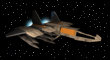
Balanced, adaptable, and politically ambitious. The most-played race in the galaxy, for good reason. A toolkit that does most things well and nothing badly.
Playstyle
Balanced
Difficulty
Beginner-friendly
Signature
Jump Gates
Empire Ladder
Consortium → Imperium
Who They Are
Humans are the dominant adaptable species of the post-contact galaxy. Their ships are reliable rather than elegant; their tactics are flexible rather than dogmatic; their diplomats are pragmatic rather than principled. They have spent the past two centuries learning every other civilisation's playbook, and they have a quiet, gathering competence about them that more dramatic races consistently underestimate.
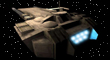
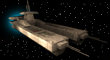
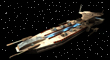
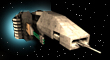
Their fleet doctrine reflects their politics: nothing wasted, nothing flashy, everything in its place. A Human battle line is a wall of Widowmaker Class Battle Cruisers screened by Hercules Escort Frigates, with Phoenix Bomber Squadrons staged off a Saratoga Heavy Carrier to push the front. Behind it all sits an Aurora Mk VII Command Vessel, the bridge that the player can step into through the ARGUS tactical view to direct the engagement personally.
"They will out-build you, out-network you, and outlast you. Their patience is their best weapon."
Their crown technology is the Jump Gate. A linked pair of gates lets a Human fleet cross the galaxy in a single tick, regardless of distance. A well-developed Human empire is stitched together by a private jump network that lets reinforcements appear on any front the moment they're needed. Rivals who try to chokepoint a Human supply line tend to discover that the supply line is everywhere at once.
Five Key Ships
Aurora Mk VII Command Vessel
Command Cruiser · Flagship
ATK 54DEF 40HP 9MP 2,500RP 57,900SLOTS 2
Your command ship, and the bridge you step into when you open the ARGUS tactical view. Loses the Aurora and you lose direct combat control until another command vessel is in range.
Widowmaker Class Battle Cruiser
Heavy Cruiser · Line workhorse
ATK 53DEF 40HP 9MP 2,500RP 45,100SLOTS 3
The body of every serious Human battle line. Three equipment slots, nine hit points, and enough firepower to bracket a target until something cracks. You build these in pairs.
Saratoga Class Heavy Carrier
Carrier · 40 berth
ATK 51DEF 40HP 8MP 2,500RP 43,000SLOTS 2
Hauls a wing of Vyper fighters, Warthog squadrons, and Phoenix bombers into engagement range. Recall and scramble at will. The Saratoga's job is to make the fighters arrive on time and well-placed.
Hercules Class Escort Frigate
Medium Cruiser · Screen
ATK 45DEF 30HP 3MP 400RP 4,000SLOTS 2
The screening unit you build in volume. Cheap, sturdy, and equipment-slotted. Hercules in numbers absorb opening alpha strikes and lets your capital line stay in position.
Phoenix ISS Bomber Squadron
Bomber · Capital killer
ATK 33DEF 10DMG 4HP 5MP 100RP 4,500
Damage four per swing. Phoenix wings are the Human answer to enemy capital ships: launched from a Saratoga, they will work down a battle cruiser in fewer salvos than anyone expects.
Empire Title Ladder
As your nation grows and your rank climbs, the galaxy's diplomatic registry updates your standing. Each tier is gated by both how much you've built and how high your personal rank has climbed.
IConsortium of Worlds0-5 systems · Rank 10
IIDominion6-10 systems · Rank 20
IIISovereignty11-15 systems · Rank 30
IVAscendancy16-20 systems · Rank 40
VImperium21-25 systems · Rank 50
How They Play
Open with breadth. Humans benefit from claiming territory wide and early. A handful of refineries, a Shipyard or two, and one Jump Gate per node will give you the economic spine to support a serious fleet by mid-game.
The Jump Gate network is everything. Two gates owned by the same player make a usable corridor; three or four make a war-winning advantage. Build them in your interior systems first, then push them toward the front as you secure new territory. Allied players whose diplomatic stance is mutual-ally can also use your gates, and you can use theirs.
Don't out-build your Maintenance Points. A Human empire that pushes past its MP cap takes structural damage every tick until it pulls back. Each Shipyard adds 2,000 MP to your pool, and your rank caps how much pool counts. Build Shipyards, rank up, then build ships, in that order.
Designate your capital early. Humans benefit more than most from capital protection because the race plays the long game. A protected capital lets you weather the mid-game wars and crisis rolls that hit Unstable empires.